
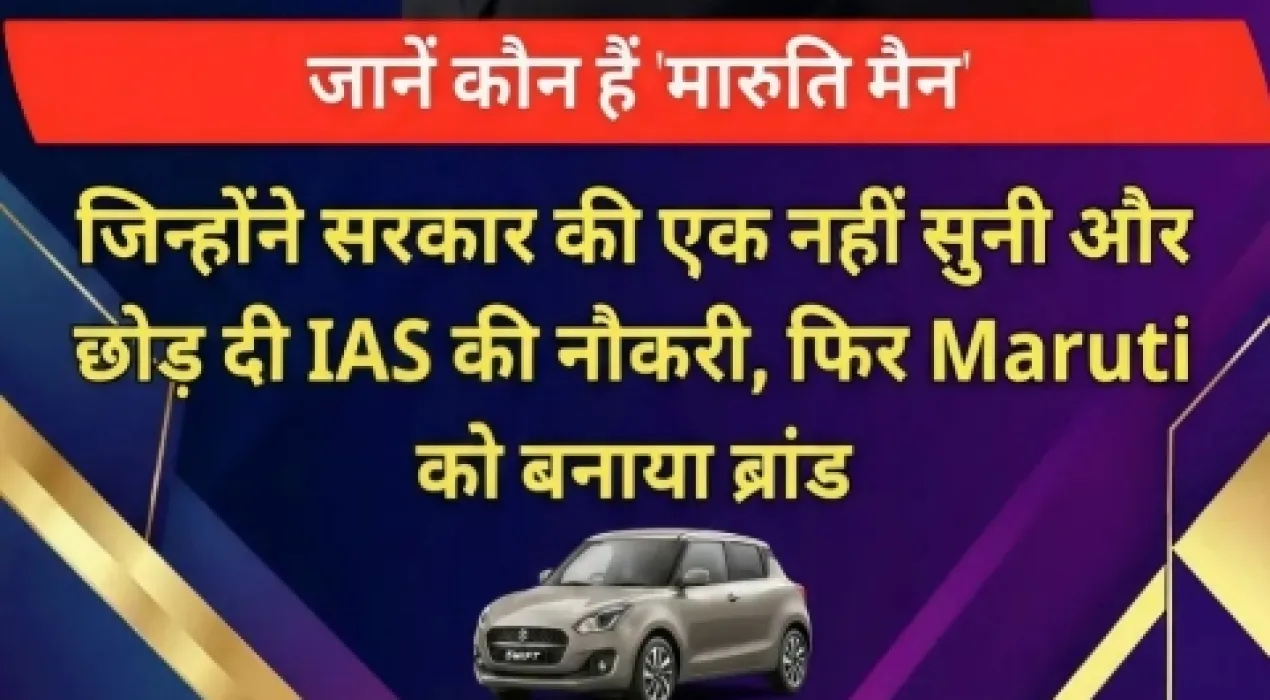
The Bureaucrat Who Motorized India,The Story of R. C. Bhargava
Few corporate leaders have influenced everyday Indian life as profoundly as R. C. Bhargava — the man widely known as the “Maruti Man.” What makes his journey remarkable is that he was not an automobile industry veteran, but a career bureaucrat from the Indian Administrative Service.

Belonging to the 1956 IAS batch, Bhargava built his early career within the corridors of government. His transition into the automotive world began in 1981, when he joined Maruti Udyog Limited on deputation. At that time, India’s car market was limited, outdated, and inaccessible to most middle-class families. Car ownership was a luxury, and choices were scarce.
When his deputation period ended, Bhargava faced a pivotal decision. He could return to the security and prestige of government service, or remain with the fledgling automaker. In a move considered bold even by today’s standards, he resigned from the IAS, placing his bet on the company’s future. It was a decision that would reshape India’s automotive landscape.
Under his leadership, the company introduced affordable, reliable, and fuel-efficient vehicles that perfectly matched the aspirations of a rising middle class. Starting in 1983, Maruti’s cars rapidly became symbols of mobility, practicality, and social progress. For millions of families, owning a car was no longer a distant dream but an achievable milestone.
The company’s evolution continued through major structural changes, including the Government of India’s divestment in 2003, after which it became a subsidiary of Suzuki Motor Corporation. By then, Maruti Suzuki had already cemented its dominance, enjoying unmatched brand trust and market presence.
Bhargava’s legacy lies not merely in corporate success but in democratizing personal transportation in India. He bridged the worlds of governance and enterprise, proving that visionary leadership can transcend professional boundaries. His story remains a powerful reminder that transformative impact often begins with unconventional choices and the courage to make them.
हिंदी भाषा मे पूरी खबर
भारत को पहियों पर दौड़ाने वाले प्रशासक: आर. सी. भार्गव की प्रेरक कहानी
भारतीय ऑटोमोबाइल इतिहास में आर. सी. भार्गव का नाम एक परिवर्तनकारी नेता के रूप में दर्ज है। उन्हें अक्सर “मारुति मैन” कहा जाता है, लेकिन उनकी सबसे दिलचस्प पहचान यह है कि वे मूलतः ऑटो एक्सपर्ट नहीं, बल्कि 1956 बैच के भारतीय प्रशासनिक सेवा (IAS) अधिकारी थे।
सरकारी सेवा में एक सफल करियर के बाद, 1981 में वे प्रतिनियुक्ति पर मारुति उद्योग लिमिटेड से जुड़े। उस दौर में भारत का कार बाजार सीमित, महंगा और तकनीकी रूप से पिछड़ा था। कार रखना आम भारतीय परिवार के लिए विलासिता माना जाता था, जबकि विकल्प बेहद कम थे। ऐसे समय में मारुति एक महत्वाकांक्षी लेकिन चुनौतीपूर्ण परियोजना थी।
प्रतिनियुक्ति अवधि समाप्त होने पर भार्गव के सामने जीवन का सबसे बड़ा निर्णय था — सुरक्षित और प्रतिष्ठित सरकारी सेवा में वापसी या निजी क्षेत्र की अनिश्चित दुनिया में कदम। उन्होंने साहसिक फैसला लेते हुए IAS पद से इस्तीफा दिया और मारुति के साथ अपना भविष्य जोड़ा। यही निर्णय आगे चलकर भारतीय ऑटो सेक्टर में ऐतिहासिक बदलाव का कारण बना।
उनकी नेतृत्व क्षमता में कंपनी ने किफायती, भरोसेमंद और ईंधन-कुशल कारों को भारतीय बाजार में उतारा। 1983 के बाद मारुति की गाड़ियाँ तेजी से भारतीय मध्यम वर्ग की आकांक्षाओं का प्रतीक बन गईं। लाखों परिवारों के लिए कार का सपना पहली बार वास्तविकता में बदलने लगा। मारुति केवल एक कंपनी नहीं रही, बल्कि भारतीय सामाजिक और आर्थिक बदलाव की पहचान बन गई।
2003 में भारत सरकार द्वारा विनिवेश के बाद कंपनी पूरी तरह सुजुकी मोटर कॉर्पोरेशन की सहायक बनी, लेकिन तब तक मारुति सुजुकी भारतीय बाजार में अपनी मजबूत पकड़ स्थापित कर चुकी थी। ब्रांड पर उपभोक्ताओं का विश्वास अभूतपूर्व था।
आर. सी. भार्गव की विरासत कॉर्पोरेट सफलता से कहीं आगे जाती है। उन्होंने व्यक्तिगत परिवहन को लोकतांत्रिक बनाया और दिखाया कि दूरदर्शी नेतृत्व पेशेवर सीमाओं से परे होता है। उनकी कहानी साहस, दृष्टि और निर्णायक नेतृत्व का प्रेरक उदाहरण है, जहाँ एक प्रशासक ने पूरे देश की गतिशीलता को नई दिशा दी।